Traffic calming measures
Since 2016, Lewisham has been a 20mph speed limit borough, and we are committed to Vision Zero. Vision Zero is the London Mayor's plan to eliminate road deaths and serious injuries by 2041, focusing on safer speeds and better road infrastructure. A key part of achieving Vision Zero is targeting locations experiencing the greatest levels of road danger.
Our approach to introducing traffic calming measures gives priority to areas based on factors such as speeding and the number of personal injury accidents that have occurred there.
Traffic calming measures are features that influence people to drive at a lower speed. These range from flashing speed signs, chicanes or road narrowing, HGV bans or restrictions, or ‘speed humps’, which is the collective term for things like speed cushions and speed tables. All these types of traffic calming have advantages and disadvantages for different road users, depending on the road conditions we are attempting to create, and are installed on a case-by-case basis.
If you feel that your road needs traffic calming measures, please complete the speed enforcement report form.
Speed cameras
The London Borough of Lewisham has no ability to install speed cameras on its road network. Speed cameras are the responsibility of Transport for London and the Metropolitan Police, with the latter having sole responsibility for speed enforcement (i.e., fines and penalty points) in London.
Residents who believe speeding is an issue in their local area can make direct representations to Transport for London and the Police for an investigation into whether or not their local road justifies the introduction of speed cameras.
Speed humps
Lewisham Council generally install speed cushions on its road network to control and reduce speeds.
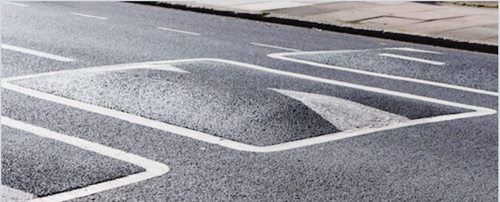
An example of a speed cushion
The premise of installing speed cushions over the other types of traffic calming is that they allow larger vehicles (specifically buses, emergency service vehicles and Heavy Goods Vehicles) to straddle the cushions. This means that these types of vehicles can pass the cushions without having to manoeuvre over them. Smaller vehicles (the average car) will need to slow to a speed of approximately 15-20mph to pass these cushions without grounding or striking the underside of their vehicle. Speeds of more than 20mph create the risk of the vehicle grounding or striking the cushion.
The shape of speed cushions is strictly regulated. 100 mm is the absolute maximum height allowed for speed cushions on public highways in the UK to control speeds.
Speed cushions can lead to complaints about increased noise and sometimes increased vibration from traffic. While the noise and vibration may be a nuisance, it is very unlikely that any damage would be caused to your property.
If you are still concerned, please contact us. We will check that the cushions comply with regulations and that there are no defects in the road surface. If there are no issues identified with these elements, then no further corrective work will take place on the cushions.